I feel like I am having to explain myself, not in a reflective way but as a justification and as a way of legitimizing what I am dong. To prove myself, to be worthy of using the terms I use and doing the things I do rather than just naturally flowing with the process. This feeling may just stem from my desire to close back up or from the fact that I am unpracticed in these things.
Autoethnography explanation – I use the term autoethnography because it fits the way in which I use my own experiences and what has happened to me and my lived experience as a woman and my inner self and filter it through the work and the things I make to process how I relate to them. I have mentioned many times that I see myself as using my own life and my own experiences as a way of exploring the way in which society treats women and as a way of expressing what it feel like to be treated certain ways by society. I explore feminism and womanhood and all the other things that affect me through my own experience and express it within the work. I saw Autoethnography as something that I am doing weather I assign that term to it or not, but that in using myself as the research subject it would progress my understanding and practice and also offer some sort of guidance if I was to use the term and hold myself accountable to understanding the field of autoethnography better. I have spoken in previous posts about making the invisible visible and I see autoethnography as a process by which this can be achieved by looking at what I am expressing and why and how and how it relates and interconnects with my own and others reserch. The following are some excerpts from The handbook of Arts Based Research by Patricia Levy (2017)
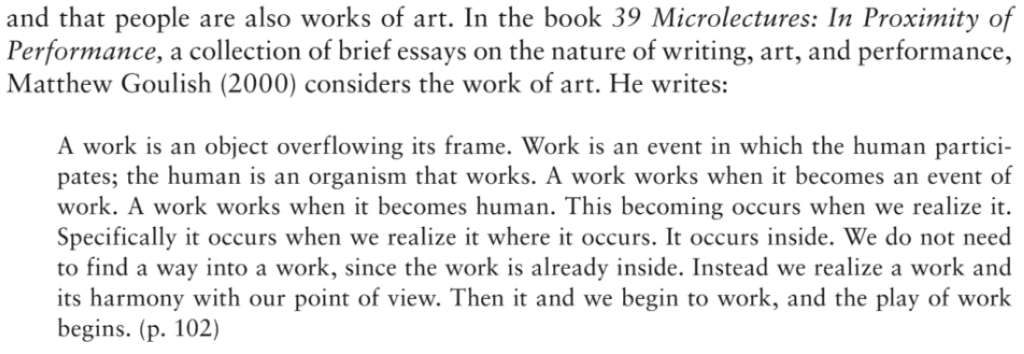
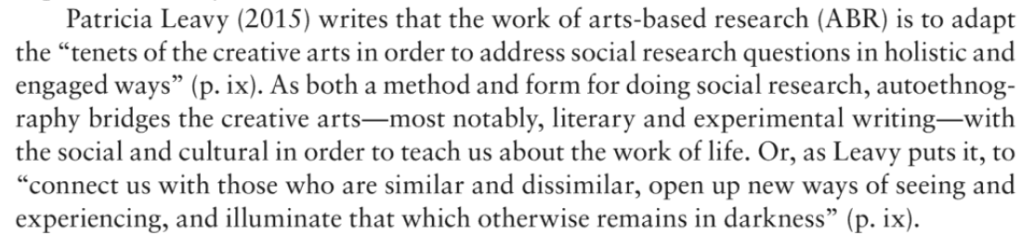
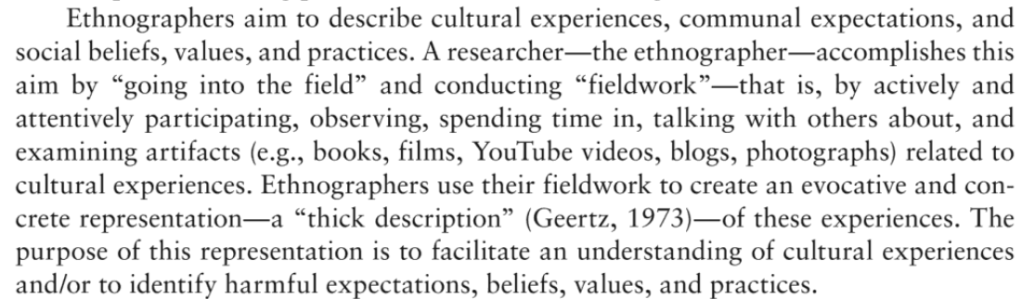
Psychogeography explanation – In my mind psychogeography combined autoethnography – recording the self and the lived experience – and phenomenology as a philosophy of the lived experience – and related more to the diaristice elements I wanted to explore of personal visual note making. I see psychogeography as very subjective, it is literally your point of view and experience filtered through your own creative practice and re-made through your own lense. If a diary, in a lot of ways, is a linear record of the passing of time a representation, as there is no truth, of the events and people and thoughts you are having, and you chose to do this visually, it could become psychogeography of not just individual journeys but of the whole journey. I think it comes back to me feeling that I have not have a plethora of women readily accessible as I have grown up and gone into my artistic practice to look at. I have had to slog to serch the few of them out. I want to know these women, their lives, their views, in order to better understand myself and see where I fit into the world. Faling that I will create my own example and my own map and add to the visual discourse in order that a future girl may feel less alone. I have travelled the same path and seen things in the way that you have seen them. I am interested in how the world, the environment, the encounters affect people, how they change you, how you interpret them, why I feel so alien, if everyone feels that way, to what extent is this because I am female, do I filter things through a female lense, always aware of my gender, or am I treated differently because I am female. Like that scene in barbie, she feels under threat in the environment, he feels lifted by it. We would not all record the same walk the same way. I also believe psychogeography to be very male dominated and very male lense, they own the environment, the landscape, they dominate it, record it in their style. I believe the women experience environments more deeply and profoundly and work to make themselves part of it much more. It is a more intricate experience.
Phenomenology explanation – phenomenology for me is about looking and not seeing, to take things as they are from my point of view and experience. It is about experiencing things as myself and communicating them as filtered through my experience without prior experiences or connotations, noticing those connotations, connections, emotions, and asking why and where they came from, is it possible to separate them from my gender, etc, where did these ideas come from. It is about embodiment, affectivity, perception, temporality and subjectivity, all of which are large parts of my practice. It is also about power and privilege and differentiability, otherness, which are huge parts of my practice. Phenomenology was my way into this exploration, the foundation and the permission to making and thinking about everything for the past two years, it even started with a woman and her writing and her diary – Simone De Beauvoir. Even now I have just come across this article which aligns with the things I have been thinking so succinctly, even from the outline.
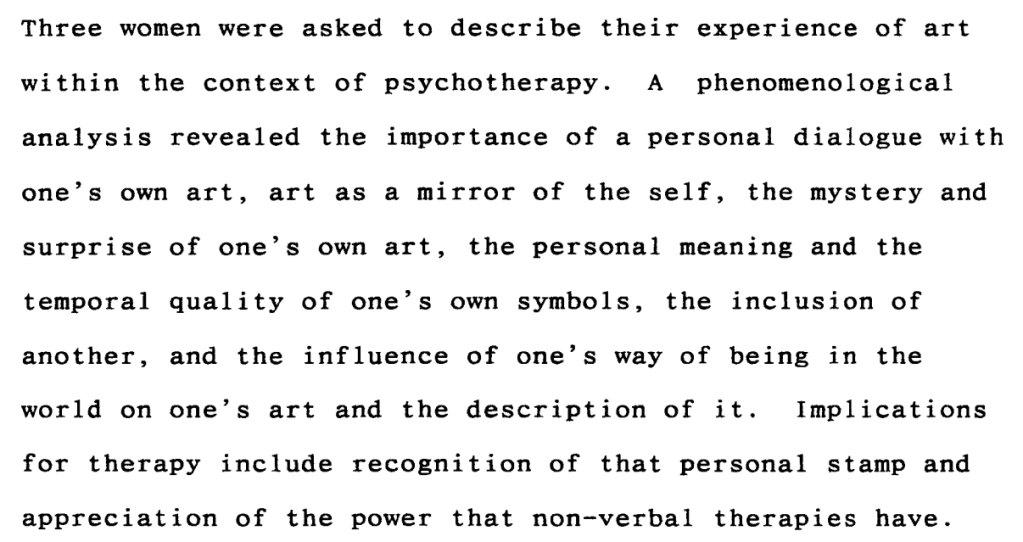
I see these three topics as tools for gaining a deeper and wider understanding of my practice which I think is important and adds value to my process as it offers me structures and process for being reflective and lenses through which to view what I am doing.
It hurts to think Jonathan of all people would think I used these terms just to sound clever or because I thought they sounded good when they mean so much to me and my practice, when finding them, with each and every one, I felt a sense of being seen and understood, of being part of something, of no longer being alone in the way I think. I thought I was being clear and that what I was relating to in my work was obvious. On the first 1:1 I am asked if it needs to be clear and I figured no it didn’t, then on the second 1:1 I reach the roadblocks of not making things explicit.
I am not in a positive mood, this whole thing has made me feel like I sound stupid and have been stupid.
I will return to positivity some other time.
Why not just let me have the sparkles
I know
Whatever
 Chelsea Swan
Leave a reply to Unit 1 Assessment – Chelsea Swan CSM Cancel reply